

Medical insurance • Review the invoice, not just the label

A practical review of pet health insurance

A closer look at medical protection, excluded expenses and how the same reimbursement percentage can produce different results.

An owner reviews paperwork at a counter while a dog and cat rest nearby
✓ Policy-first ✓ Independent ✓ Useful checks
Direct answer
Pet health insurance is most useful as protection against eligible veterinary losses you would struggle to fund, but its value depends on which expenses enter the claim calculation. Compare the medical bill that remains yours, not just the headline percentage or the word “health.”
What to know

What this review assessed

The review asks three questions: which part of an unexpected medical invoice the policy can recognize, which costs the owner retains, and whether the household can use the payment arrangement. It uses current official product descriptions and regulator guidance. It does not report purchased-policy experience, a test claim, market-average premiums or satisfaction survey scores.

Accident-and-illness protection, accident-only insurance and a preventive arrangement do different jobs. This page evaluates the medical protection first. A routine allowance can be assessed separately, but adding it does not make an excluded illness payable.

The product examples below show meaningful design differences. They are not a claim that those three companies exhaust the market or that an advertised benefit determines every claim.

What to know

The consultation fee exposes a real design difference

Reviewed design Published treatment of medical exams Implication for the review
ASPCA Pet Health Insurance Complete Coverage Examination fees for eligible conditions are part of the described medical package Compare the full included package, subject to the underlying condition qualifying.
Trupanion’s described medical product Veterinary examination fees are excluded Include consultation expenses in the owner’s retained-cost estimate.

The practical judgment is conditional. Included consultations can make a package more useful if that expense matters to you. Excluding them may still be acceptable when you deliberately prioritize a different feature. The missing service has to be valued honestly rather than hidden behind a larger percentage.
What to know

A fictional invoice reverses the percentage impression

Suppose a purely invented invoice totals $1,250: $150 in examination fees and $1,100 in otherwise eligible treatment. Assume a $250 remaining deductible, no cap reached and a fictional rule that subtracts the deductible before applying reimbursement.

Fictional configuration Calculation Owner retains from the invoice
80% reimbursement; exam included ($1,250 − $250) × 80% = $800 paid $450
90% reimbursement; exam excluded ($1,100 − $250) × 90% = $765 paid $485

The higher percentage returns less in this deliberately chosen example because it applies to a smaller eligible base. The difference is $35 before premiums. These are not quotes, treatment-price estimates or calculations for any named insurer. A real policy may use another calculation order or payment base.

Change the invoice composition and the result can change too. The lesson is to ask for the eligible charge set and formula. It is not evidence that 80% is generally preferable to 90%.

Quotes

Review the medical result and the cash requirement separately

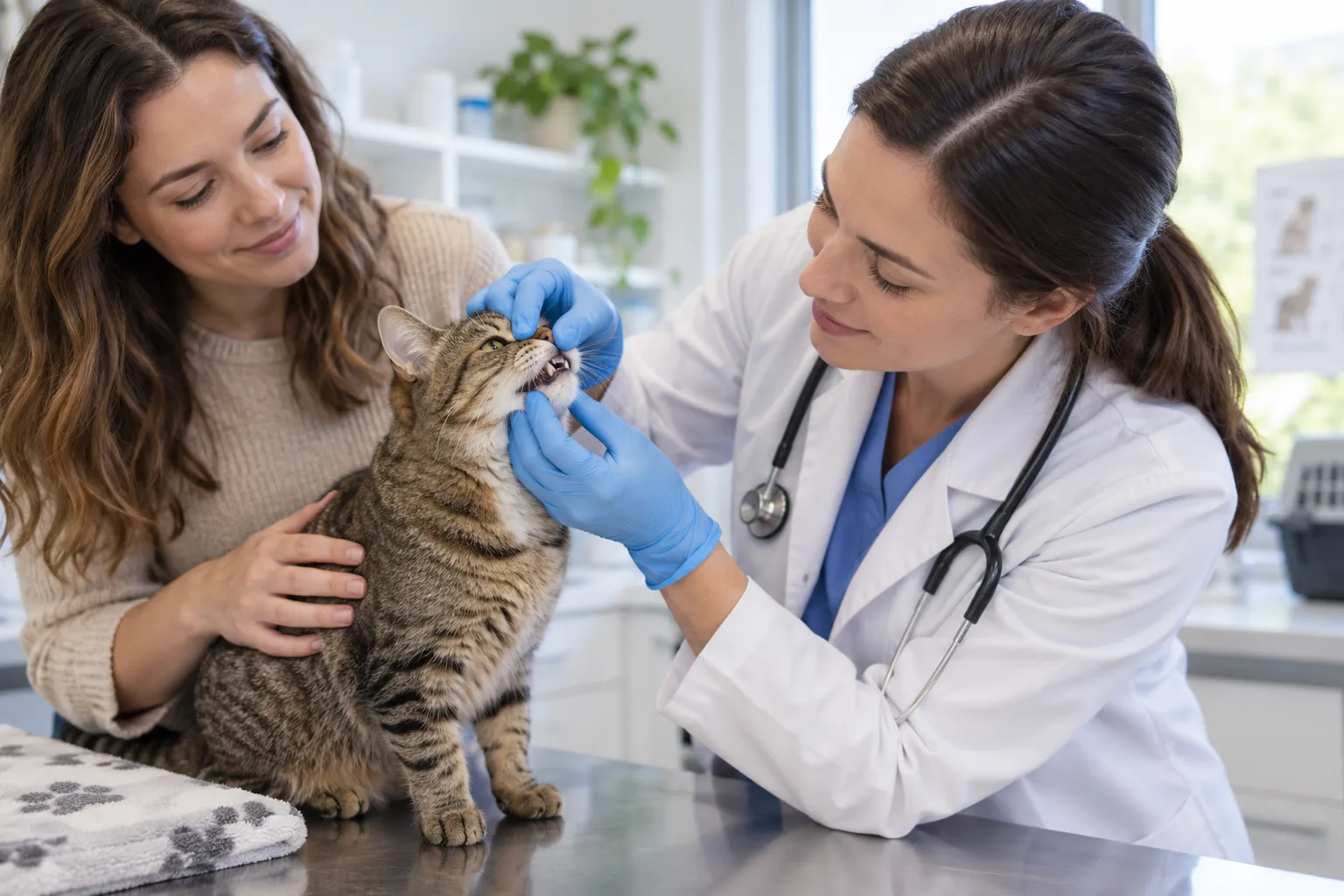
A veterinarian examining a cat’s mouth
One appointment can contain several charges with different insurance treatment.

A policy can ultimately reimburse a useful amount while still leaving you responsible for the clinic’s initial bill. Ask the practice what is due and the insurer what payment route is available for that setting. A promise about reimbursement is not a confirmed deposit arrangement.

Before calculating anything, ask whether the underlying condition is eligible. If the whole course of treatment is excluded under the pet’s prior history, an otherwise accurate reimbursement calculation is beside the point. If only certain charges are excluded, identify them individually rather than treating the entire visit as covered or uncovered.

Also preserve the remaining annual benefit and any smaller service limit. The same invoice can produce a different payment after previous claims have used part of a cap. A review that resets every example to a fresh policy hides that possibility.

What to know

Our conclusion, and what the evidence cannot tell you

A medical policy is a strong candidate when its eligible expense base matches the protection you want and the premium plus retained costs remain manageable. An attractive preventive menu or a high headline percentage cannot settle that question alone.

Customer reviews can help generate questions about communication or records, but they do not provide the complete facts behind another pet’s claim. The FTC warns that online reviews can be manipulated and advises checking context and multiple sources. This review does not convert anecdotes into approval rates.

Before choosing, request the state form, selected schedule and an explanation of one representative invoice under those terms. Keep the quote and exclusions with that explanation. That is a more useful review outcome than a star score whose assumptions are invisible.

Evidence

Sources and policy context

These public references support the consumer or veterinary context. Named insurer details were checked in official product materials; the policy offered for your pet and state determines the actual terms.

Next step

Compare Current Pet Insurance Rates

Check current options for your pet and location, then compare the policy details, exclusions, costs, and eligibility before choosing.

Compare the policy before you choose Check the actual offer, exclusions and out-of-pocket terms.
See Rate Options